It was a cold morning as we headed up to the Kaweka Range to do a health check on Huripari, a young male kiwi. Huripari is an adventurous young bird. He was first released near the Makahu Saddle Hut but decided to venture further afield to discover new lands. He travelled many kms all the way up and down valleys, over streams to the far end of Northern Birch. During his first transmitter change he was taken back to the Makahu Saddle Hut area because he was getting too close to farmland and high cat and ferret numbers. But Huripari had other ideas, it didn’t take him long before he was back roaming the same valley and creeks.
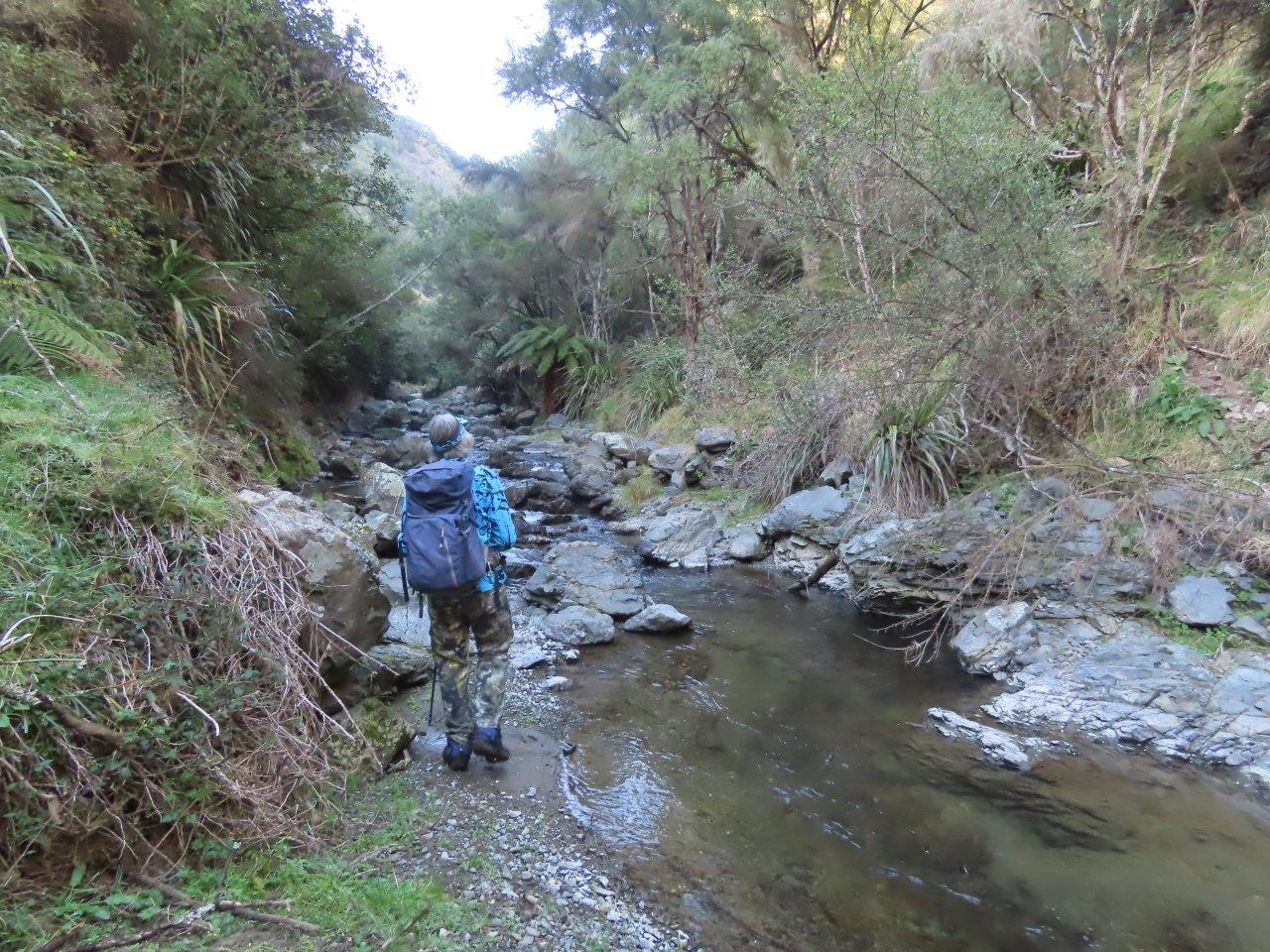
Last week after completing a health check on a kiwi named Blew in the Makino track area, I got a ride with Chris Crosse in his gyrocopter and scouted Northern Birch with the receiver and aerial and got a very strong signal for Huripari at the top of a ridge in a small basin near Williams Hill. Four days later (29 April), Robyn and I received permission from the local farmer to cross his land and we headed up above the Anawhanua Stream into the Forest Park. We didn’t hear a signal from Huripari so thought he must have gone over the ridge into the next valley. It was a decent climb to reach the ridgeline pushing through tight scrub, beautiful beech and mahoe trees then back into tight scrub. At the top I was convinced we would get a signal, alas no sound from any direction. We made our way along the ridge following the odd deer trail pushing through manuka, crawling under low branches, all the time listening both sides for Huripari. We were starting to doubt ourselves! Several times we checked the channel number was correct and equipment was working properly. Where could he be?
We pushed on. Just after midday we got a beep from the receiver – great, we are heading in the right direction. The beeps faded in and out as we plodded along. Then nothing. Hot and exhausted and covered in mingimingi scratches we stopped for a lunch and a drink and to enjoy the view of the Kaweka Range. We looked at our maps and made the decision we would carry on along this ridge for another hour and eliminate all the guts and creeks to the left as that was where we heard the last beep. As the ridge curved Robyn picked up a weak signal but this time to the right. We needed to find a higher spot to listen from. A flax bush was the answer. Robyn climbed up and got a decent beep in a definite direction.
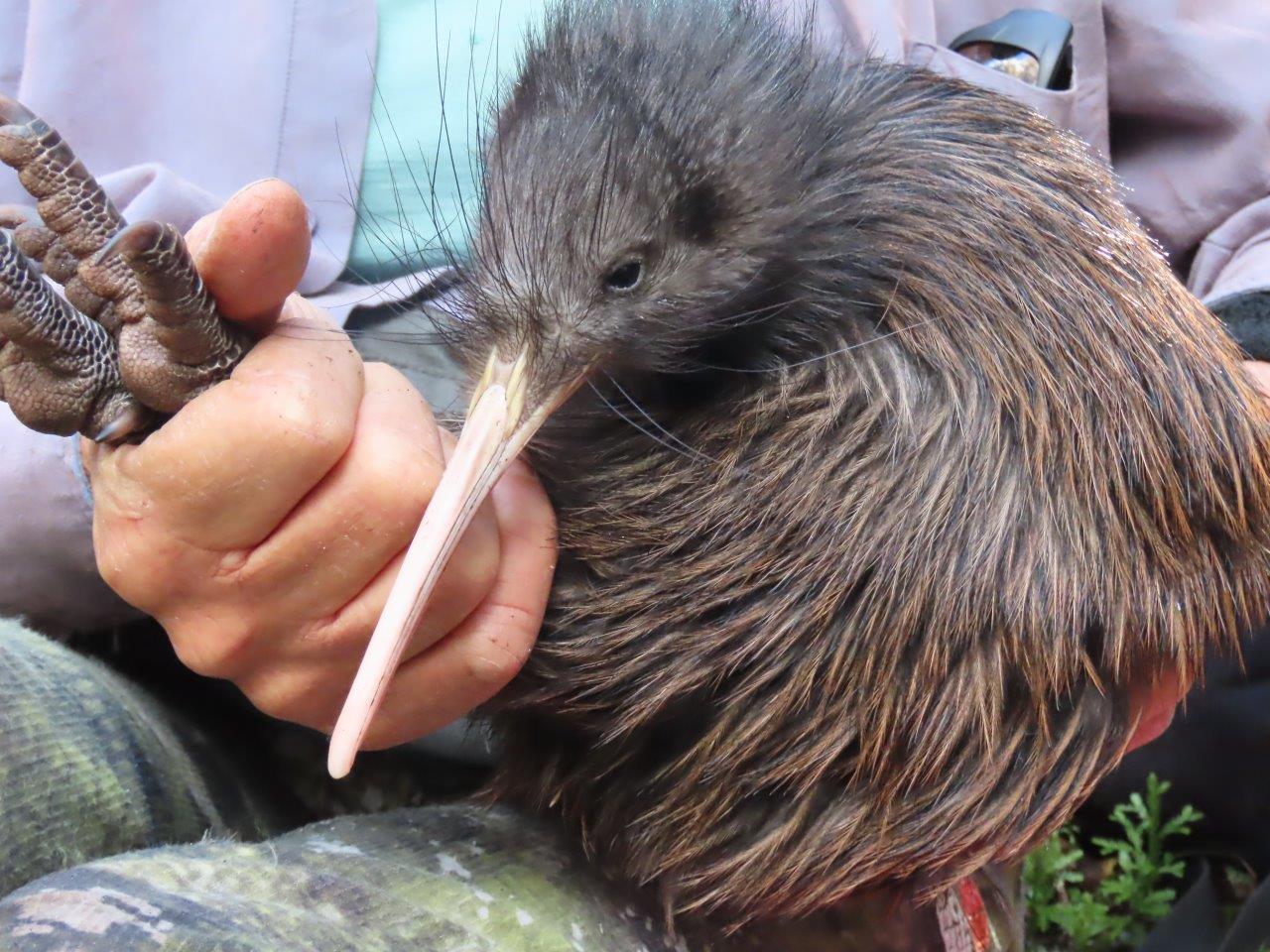
After another 15 minutes of following a deer trail, we got some very loud beeps. Great, alleluia! Robyn did her magic with the aerial and after a bit of crawling under bushes we were in his locality. On a steep flaxy area somewhere below us was Huripari. We dropped our packs, got our torches out and searched the thick damp overgrowth between us. As I slid down, Robyn shouted “he is on the move’ I ducked down quickly under the scrub as he raced towards me. “Got you’’ I said as I grabbed his legs – what a relief. He was a beautiful healthy young bird. I changed his transmitter to the other leg and took his weight and beak measurement, while Robyn did the paperwork. All done, we placed a sleepy Huripari back into the undergrowth and wished him well and off we went. Checking our map, we decided not retrace our track but head out towards the nearest farmland, nearly two hours later we were back at the truck.
Story by Fi









Leave a Reply